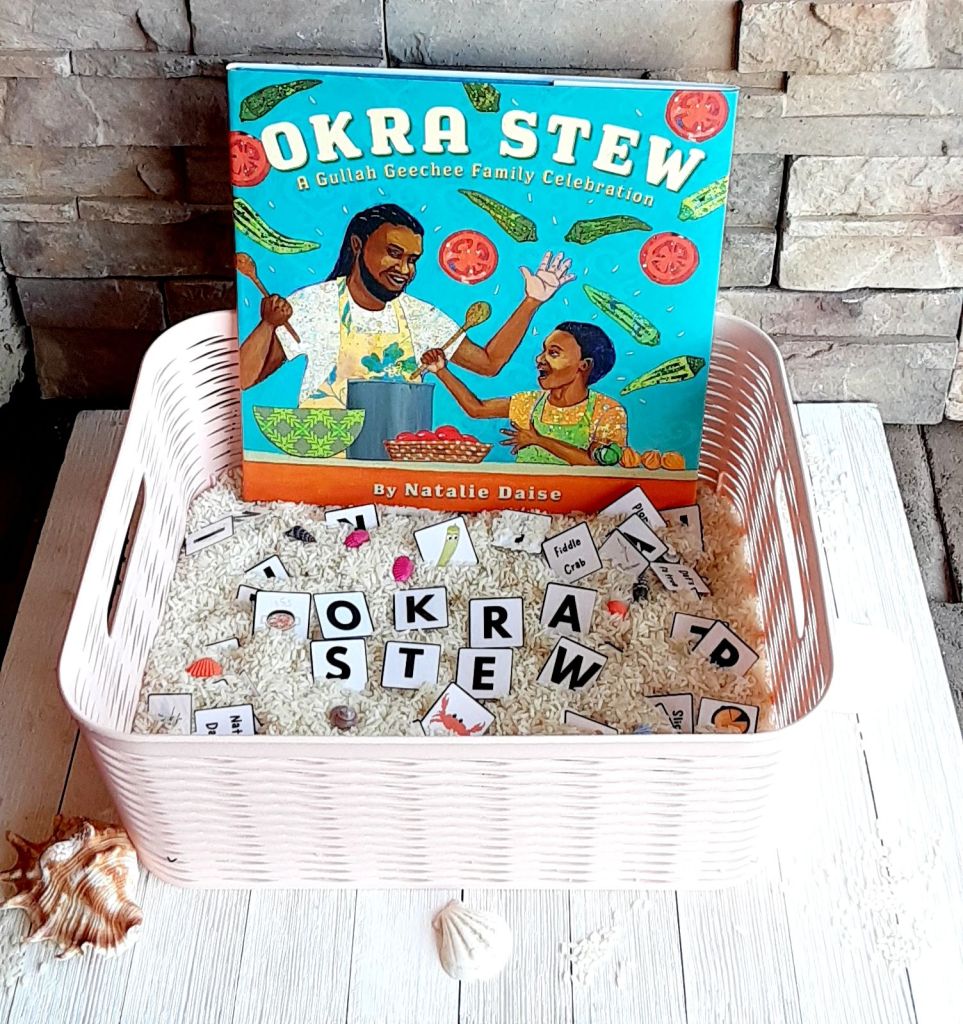
Make reading fun and foster a love of literature by adding a sensory bin to your storytime!
Link to download FREE Story Tiles here:
https://www.teacherspayteachers.com/Product/Okra-Stew-Story-Tiles-11322094
The Benefits of Sensory Bins
Children learn best from activities and lessons that are hands on and engaging. Sensory bins provide an excellent opportunity to facilitate this type of learning! Sensory bins can be tailored to stimulate a variety of the five senses.
Touch: Sensory bins usually begin with a filler material or substance such as rice (as shown above), sand, water, beans, paper, pebbles, whipped cream, corn, pudding, etc… Remember to always choose age-appropriate fillers for sensory bins that do not pose choking hazards to young children and be mindful of any fillers that may cause allergic reactions in some children.
Fillers stimulate the sense of touch as children will experience textures and the feel of different materials/substances in and on their hands.
Sight: Once the sensory bin has been filled with an age-appropriate filler, objects related to the lesson/activity are then added to the bin. Objects such as letters, numbers, pictures, flash cards, transportation toys, play food, play animals/insects, dinosaurs, natural items such as seashells (shown above) pinecones, leaves, etc… There are countless objects that can be added to sensory bins, the only limitation is your imagination!
In addition to being fun, the objects placed in the sensory bin sharpen hand-eye coordination and strengthen fine motor skills. As with filler materials, objects placed in the bin should be age-appropriate and safe.
Hearing: As children dig, scoop, squish, pick up and drop the materials and objects in the bin different sounds will flood their ears!
Smell & Taste: Depending on the filler material you choose the senses of smell and taste may be stimulated. Utilize different foods such as: whipped cream, popcorn, fruit, cereal, noodles, pudding, etc… Make sure food fillers are age-appropriate and mindful of allergies.
The Okra Stew Sensory Bin
This sensory bin is inspired by the book, Okra Stew: A Gullah Geechee Family Celebration, written and illustrated by Natalie Daise. In this story a young child and his father spend the day preparing to cook a delicious meal of Okra Stew for the family dinner. Readers join the two characters as they spend the day gathering the ingredients needed for the stew with a visit to their garden and the beach. Once in the kitchen the meal prep begins with much chopping, slicing, and dicing which makes this book such a fun and exciting read aloud!

Sensory Bin Filler: Rice
“…gotta have rice with okra stew!”
This is my favorite page from the book so there was no question that rice would be the filler for my bin! Rice is both a cheap and reusable filler for sensory bins. I left the rice white for this bin, but rice has the added benefit of being dyed different fun colors for other sensory bins! Sand is another filler option to give the bin a beachy feel!
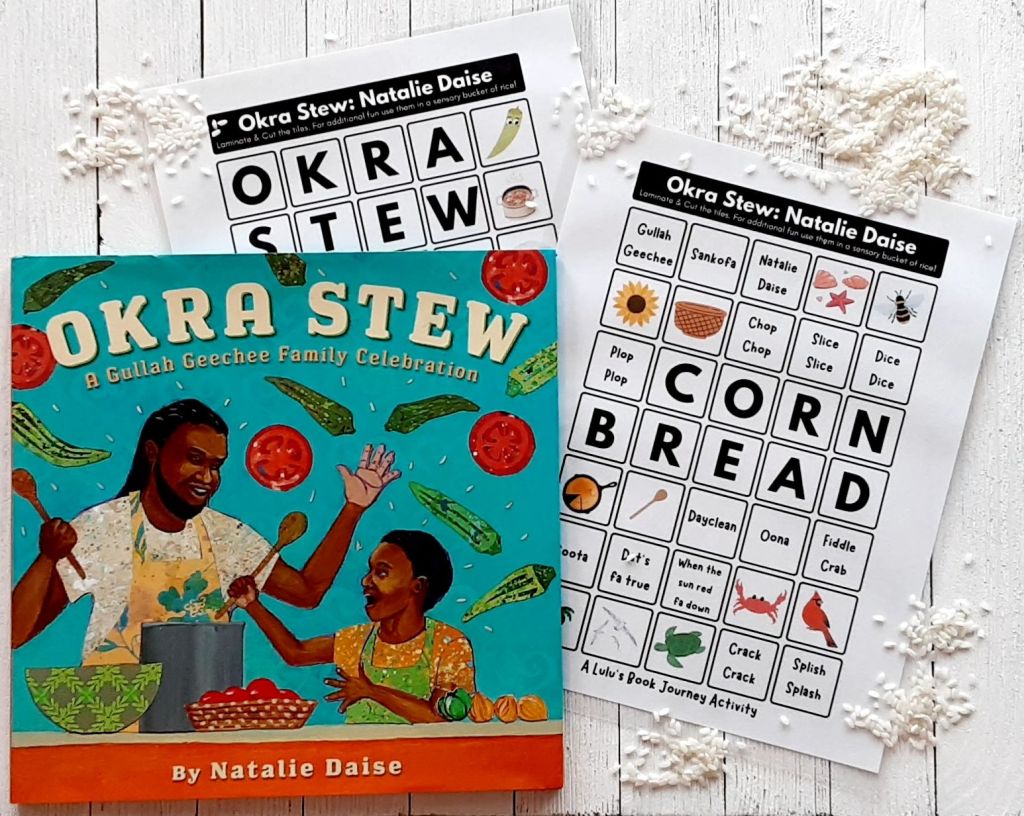
Sensory bin objects: Tiles & Seashells
I created a set of tiles based off of words, illustrations and vocabulary used in the book.
Letter tiles spell out the words: Okra, Stew, Rice, Shrimp, Tomato, Onion, and Cornbread.
Picture tiles include foods, cooking utensils, animals, and nature items illustrated throughout the book.
Word tiles include Gullah Geechee words and phrases used in the book. A guide with definitions of these words is provided in the book after the story. Word tiles also include action words relating to the preparation of the stew such as: Chop Chop, Slice Slice, Dice Dice, etc…
Tiles were laminated for continuous use.
Little seashells were also added to the bin to reflect the characters visit to the beach. Additional ideas for bin objects includes; sunflowers, play ocean/beach animals such as crabs, seagulls, fish, turtles, birds and play foods such as; tomatoes and onions, etc…
The Okra Stew book and sensory bin is a great introduction for children to the Gullah Geechee culture. A recipe for Okra Stew is provided in the book as well as notes from the author for further discussion of the history, heritage and traditions celebrated by Gullah Geechee families and communities.

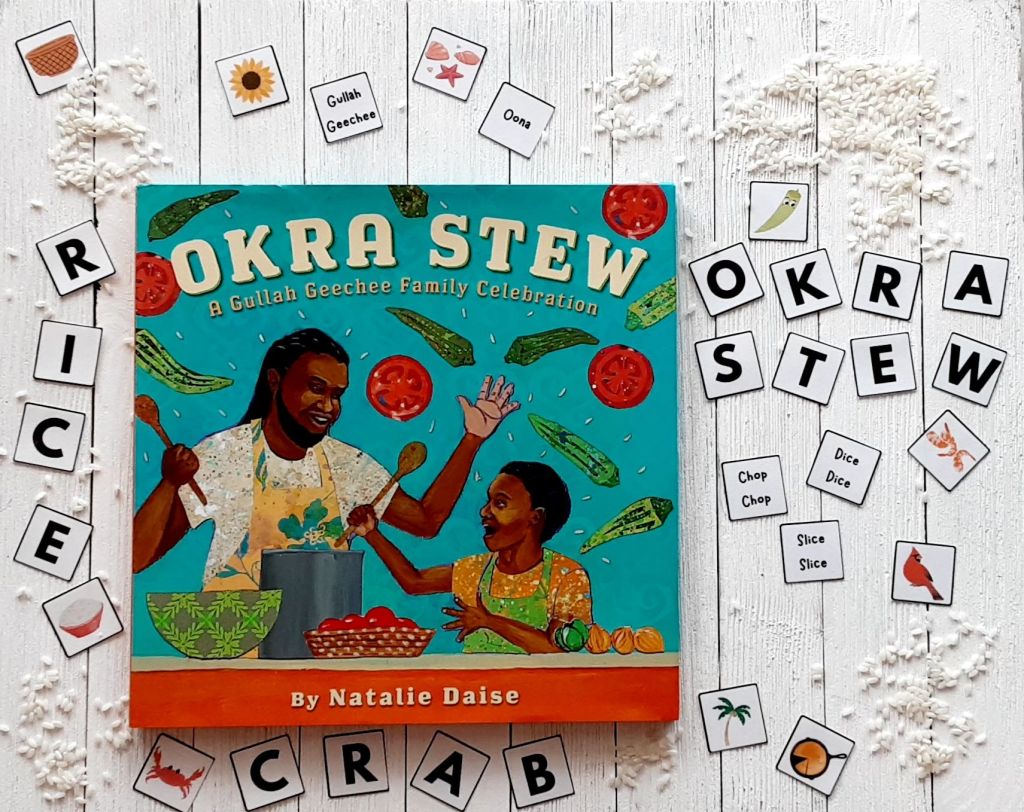
I hope you enjoy this Okra Stew Sensory Bin and would love to see how you set up your bin! Tag Lulu’s Book Journey on Instagram and/or Facebook and follow along for more fun!
 Lulu's Book Journey
Leave a comment